Diagnose the decision before the crash
To reduce crashes in SKI (ALPHA), identify what happened immediately before each collision: a late route choice, an unintended input, a lost view of the next opening, or a landing you had not prepared. Test one change on the next comparable attempt instead of changing your entire approach.
The official game description makes avoiding crashes while maintaining speed part of the core challenge. A mistake also costs time. Checking what went wrong can help whether you want your first finish or a cleaner race.
Sort the problem into a useful practice category
The categories below are a way to organize your own observations. They are not named crash types, penalties or hidden systems inside the game.
| What you noticed | Question to ask | One comparison to try |
|---|---|---|
| You changed passage at the last moment | Had you picked a clear opening early enough? | Choose the passage earlier and keep your other inputs familiar |
| An unexpected move started | Did you use a trick trigger while intending movement? | Separate normal movement from deliberate trick inputs |
| The next obstacle arrived as a surprise | Were you watching only the nearest object? | Look through the opening and inspect its exit |
| The landing ended the attempt | Had you chosen the landing before jumping? | Make a simpler airborne attempt with a readable continuation |
| You lost the view during a difficult choice | Did you adjust the camera at the same time? | Set the camera before the section |
Pick the category that best describes your last attempt. You do not have to label every crash perfectly. A specific question is enough to create a useful next test.
Move the route decision earlier
If you keep switching between openings near an obstacle, look beyond the first available gap. Choose a passage whose exit you can read, then make the movement decision before the section becomes crowded.
Suppose you notice two openings and keep changing your mind between them. On the next comparable attempt, choose one readable opening earlier rather than waiting to discover which is faster. Judge whether the earlier decision was easier to carry out. Save the time comparison for a later test.
This does not prescribe a fixed safe side of every mountain. Use the arrangement in front of you. A route recommendation that depends on an exact obstacle layout does not automatically transfer to another course.
Separate input confusion from route difficulty
An unintended action can look like poor route choice when the real problem is that you did not recognize the input you made. On keyboard, the trick list includes double taps of directional keys and Q/E. Mobile uses right-side swipes or holding/double-tapping jump. Controller tricks use the D-pad or X.
If you cannot explain an unexpected move, practice the relevant input individually before adding it to the obstacle section again. Make a movement-focused attempt, then a deliberate trick test. Do not use a longer combination to diagnose a single unfamiliar action.
Compare the input you meant to make with the response you got. Do not look for an undocumented collision-cancel button. Check the current controls when the action differs from what you expected.
Review the landing and the next passage together
An airborne move can look successful until you return to the slope. Before takeoff, choose a landing area and think about where you will continue afterward. Keep the airborne action simple while investigating repeated landing crashes.
Ask whether the extra trick made the landing harder to read, whether the approach left you with an unclear choice, or whether you concentrated on the move and stopped watching the continuation. Pick one of those questions for the next attempt.
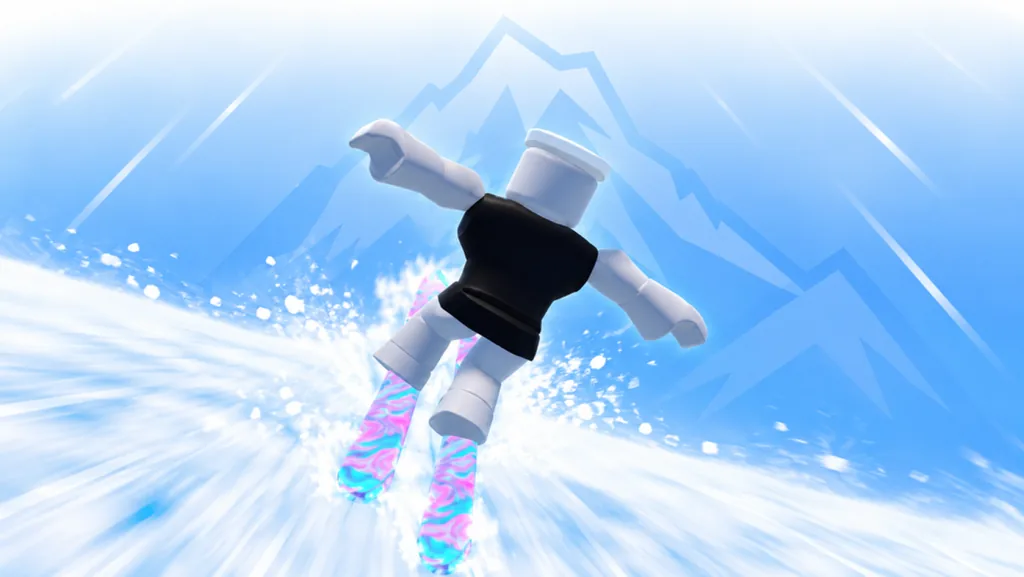
The gameplay below shows the downhill setting and obstacle corridor. Use that visual context to recognize the kind of decisions you need to make, rather than copying an exact route for every server.
Keep a short mistake log
Use a personal log with three fields: the problem you noticed, the one change you tested, and whether the same problem returned. A note such as “changed camera while choosing the gap; set view earlier; next choice was clearer” is more useful than “bad run.”
If the course or settings change, note that too. A successful attempt on a different layout does not isolate your previous correction. Compare what you can explain rather than treating every result as proof of one change.
When a correction helps, keep it familiar for another attempt before extending the trick or route plan. Aim to understand and reduce those mistakes. One correction cannot guarantee a crash-free run.
FAQ
What should I review after a crash?
Start with the action immediately before it. Identify whether the problem involved route choice, input, visibility or landing, then choose one comparison for the next attempt.
Does this guide list official crash categories?
No. The categories organize practice observations. They are not a list of coded penalties or hidden collision systems.
Why do I crash after an airborne move?
Review whether you had chosen a landing and could read the following passage. Simplify the airborne action while testing that question.
Should I change my camera and controls together?
Keep one change per comparison when diagnosing a recurring mistake. Changing several things makes it harder to identify which action helped.
Can one correction guarantee a crash-free descent?
Use a correction to reduce a specific recurring problem, then compare more attempts. The route and your other decisions still need attention throughout the descent.